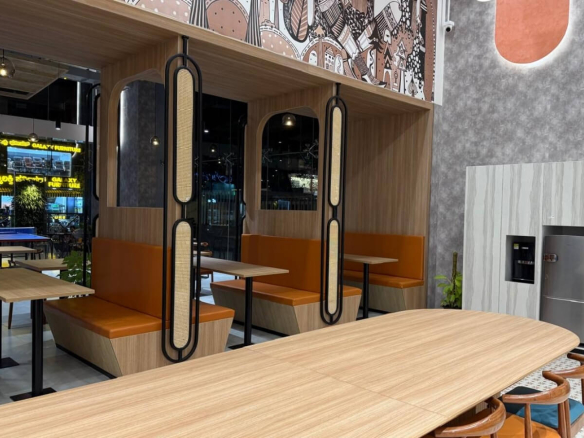
For a long time, growth in a company was measured in square feet. More people meant more desks, more meeting rooms, and eventually, a bigger office. But that thinking is changing—fast.
In 2026, many founders are questioning a basic assumption:
Do we really need more office space, or do we just need to use our current space better?
The answer, increasingly, is the latter. Instead of immediately expanding into larger offices, smart founders are investing in workplace efficiency tools—software that helps them understand, manage, and optimize how their teams actually use space.
The Problem with Expanding Too Early
Office expansion is expensive. It’s not just about higher rent.
Moving into a larger space often means:
- Higher security deposits
- Interior fit-outs and furniture costs
- Increased maintenance and utility expenses
- Long-term lease commitments
Once you scale up your office, it’s difficult to scale it back down. You’re locked into a cost structure that doesn’t always match how your team works.
This becomes risky in a world where:
- Teams are hybrid
- Hiring plans change quickly
- Office attendance fluctuates week to week
Expanding without data often leads to underutilized space and wasted capital.
The Shift: From Space-Led to Data-Led Decisions
Modern workplace tools are changing how companies think about office space.
Instead of guessing how much space they need, companies can now track:
- Desk occupancy rates
- Meeting room usage
- Peak office days
- Team-wise attendance patterns
This data often reveals something surprising:
most offices are not fully utilized.
In many cases, companies operating at “full capacity” on paper are actually using only 50–70% of their space on a daily basis.
That gap is where workplace tools create value.
What Workplace Efficiency Tools Actually Do
Workplace tools aren’t just about booking desks. They give companies visibility and control over how space is used.
Some common capabilities include:
1. Desk Booking Systems
Employees reserve desks in advance instead of having fixed seating.
This allows companies to operate with fewer desks than employees.
2. Meeting Room Management
Tracks how often rooms are used, for how long, and by whom.
Helps eliminate underused or overbooked spaces.
3. Occupancy Analytics
Provides real-time and historical data on office usage.
Shows peak days, idle zones, and inefficiencies.
4. Hybrid Work Coordination
Helps teams plan in-office days more effectively, avoiding overcrowding or empty offices.
Together, these tools turn the office into a measurable, optimizable asset—not just a fixed cost.
The Financial Impact: Saving Before Spending
The biggest advantage of workplace tools is simple:
they help you delay or avoid unnecessary expansion.
Let’s say a company plans to move from a 5,000 sq ft office to a 10,000 sq ft space.
Without data, that decision is based on projected growth.
With workplace analytics, they might discover:
- Only 60% of desks are used daily
- Certain teams come in on different days
- Meeting rooms sit empty most of the time
Instead of doubling space, they can:
- Introduce flexible seating
- Optimize layouts
- Reconfigure underused areas
The result?
They continue operating efficiently in the same space—saving lakhs in rent, deposits, and setup costs.
Flexibility in an Uncertain Environment
One of the biggest challenges for founders today is uncertainty.
Hiring plans change. Teams expand and contract. Remote work policies evolve.
Traditional office expansion doesn’t handle uncertainty well. It locks you into fixed costs.
Workplace tools, on the other hand, give you flexibility:
- Scale usage without changing space
- Adapt to hybrid work patterns
- Make decisions based on real-time data
This flexibility is often more valuable than the extra space itself.
Productivity Isn’t About More Space
There’s also a misconception that bigger offices automatically improve productivity.
In reality, productivity depends on:
- How teams collaborate
- How efficiently space is used
- Whether the office supports actual work patterns
Workplace tools help optimize all three.
For example:
- Teams can coordinate in-office days for better collaboration
- Employees spend less time searching for desks or rooms
- Offices are designed around actual usage, not assumptions
This leads to a more functional workspace, not just a larger one.
When Expansion Actually Makes Sense
This doesn’t mean companies should never expand their office.
Expansion makes sense when:
- Space is consistently operating at high utilization
- Teams require dedicated infrastructure
- Business growth is stable and predictable
But the key difference is this:
smart founders expand based on data, not instinct.
Workplace tools provide that data.
The Bigger Shift in Office Strategy
What’s happening here is part of a larger shift.
Offices are no longer just physical spaces—they’re becoming strategic assets that need to be optimized like any other part of the business.
Founders are starting to ask:
- What’s our cost per employee in terms of space?
- How much of our office is actually used?
- Can we achieve the same output with less space?
These are questions that weren’t being asked a few years ago.
Now, they’re central to decision-making.
Final Thoughts
The smartest founders today aren’t rushing to get bigger offices—they’re working to make their current ones smarter.
By investing in workplace efficiency tools first, they:
- Reduce unnecessary costs
- Improve flexibility
- Make better, data-driven decisions
And when they do decide to expand, they do it with clarity—not guesswork.
At bangaloreoffice.com, we see this shift play out every day. Companies often come in thinking they need more space, but what they really need is better planning, smarter layouts, or even downsizing and office consolidation to reduce costs and improve efficiency.
Because in 2026, the goal isn’t just to grow your office—
it’s to grow it intelligently.