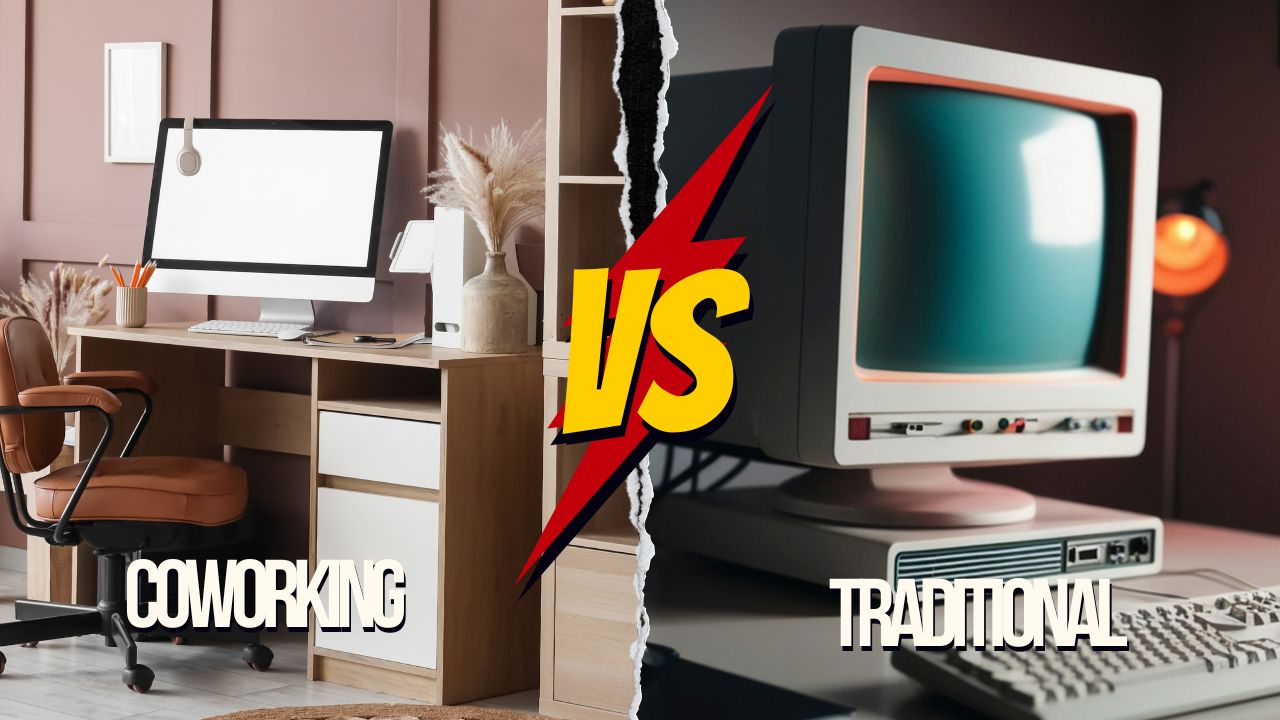
The way companies think about office space in India has changed dramatically over the last few years. What used to be a straightforward decision—lease an office and grow into it has now become a strategic choice between flexibility and control, capital efficiency and long-term stability.
In 2026, the comparison between coworking and traditional offices is no longer about preference. It’s about cost structures, team behavior, and how businesses plan to scale.
The Fundamental Difference in Cost Structure
At a surface level, comparing office options seems simple: cost per square foot vs cost per seat. But in reality, the difference runs deeper.
A traditional office involves:
- Long-term lease commitments (typically 3–9 years)
- High security deposits
- Interior fit-outs and furniture costs
- Ongoing expenses like utilities, maintenance, and staffing
A coworking space, on the other hand, follows a plug-and-play model:
- Pay per seat or cabin
- Minimal upfront investment
- Utilities, internet, and services bundled into one price
This difference in structure—not just price—is what drives most decisions in 2026.
Cost Comparison: Real Numbers from India
Let’s look at actual numbers to understand how these models compare.
Coworking Costs (India)
- ₹6,000 – ₹12,000 per seat/month in major cities
- Includes internet, electricity, cleaning, and shared amenities
Traditional Office Costs (India)
- ₹60 – ₹120 per sq. ft/month in metro cities
- Additional costs:
- Interiors and furniture
- IT infrastructure
- Maintenance and admin staff
For a 10–15 person team, coworking often results in lower upfront and predictable monthly costs, while traditional offices require significant initial capital.
The Hidden Cost Factor
One of the biggest misconceptions about traditional offices is that rent reflects the total cost. In reality, rent is just the starting point.
Additional expenses typically include:
- Electricity and backup power
- Internet and networking
- Housekeeping and security
- Repairs and maintenance
- Legal and compliance costs
These costs can significantly increase the total monthly outflow, making traditional offices less predictable financially.
Coworking spaces simplify this by bundling most of these into a single monthly fee, which makes budgeting easier—especially for startups.
Upfront Investment vs Cash Flow Efficiency
Traditional offices require heavy upfront investment:
- Security deposits (often 3–6 months or more)
- Interior build-outs
- Furniture and equipment
This locks capital that could otherwise be used for hiring, marketing, or product development.
Coworking eliminates most of these costs. Businesses can start operations immediately without waiting for setup or approvals.
For early-stage companies, this difference alone can be decisive.
Flexibility and Scalability
In 2026, flexibility has become one of the most important factors in office decisions.
Coworking:
- Scale up or down easily
- Add or remove seats based on team size
- Short-term contracts (monthly or quarterly)
Traditional Office:
- Fixed space regardless of usage
- Difficult and costly to scale
- Long lock-in periods
This matters because most modern teams are not static. Hybrid work models and changing hiring plans mean companies rarely use 100% of their office space all the time.
Coworking aligns better with this reality.
Time to Operational Readiness
Another overlooked factor is how quickly a company can start working.
With a traditional office:
- Lease negotiations take time
- Interiors and setup can take weeks or months
- IT and infrastructure need installation
With coworking:
- Offices are ready to use immediately
- Teams can move in and start work on day one
This “time to productivity” has a real cost implication, especially for fast-moving startups.
Market Trends in India (2026)
India’s office market is shifting toward flexibility.
- Startups and SMEs are increasingly choosing coworking due to cost efficiency and lower risk
- Even large enterprises are adopting hybrid workspace strategies
- Demand for flexible office solutions continues to grow as work models evolve
Recent industry observations show that coworking spaces are no longer just temporary solutions—they are becoming a core part of long-term workspace strategy for many companies.
When Traditional Offices Still Make Sense
Despite the rise of coworking, traditional offices are far from obsolete.
They are often a better fit when:
- Team size is stable and predictable
- Long-term cost optimization is a priority
- Custom branding and layout are important
- Data privacy or operational control is critical
For larger teams (50+ employees), a well-negotiated lease can sometimes be more cost-efficient over time.
Practical Scenario Comparison
Scenario 1: Early-Stage Startup (10 employees)
- Coworking: Lower cost, no setup, flexible
- Traditional: High upfront cost, long commitment
👉 Best fit: Coworking
Scenario 2: Scaling Startup (30–50 employees)
- Coworking: Higher per-seat cost over time
- Traditional: Better long-term economics if stable
👉 Depends on growth certainty
Scenario 3: Established Company
- Coworking: Flexible but less controlled
- Traditional: Brand control, stability
👉 Best fit: Traditional office
Final Thoughts
The coworking vs traditional office debate in 2026 isn’t about which is better—it’s about which model fits your stage of business.
Coworking offers:
- Lower upfront cost
- Flexibility
- Predictable expenses
Traditional offices offer:
- Control
- Stability
- Long-term cost advantages at scale
For most startups and growing teams in India, coworking has become the default starting point, while traditional offices come into play once the business stabilizes.
The smartest companies today don’t treat this as a one-time decision. They treat it as a workspace strategy, evolving their office model as the business grows.