Bangalore, India’s undisputed technology capital, has consistently attracted global corporations, fast-growing startups, and ambitious entrepreneurs. Over the years, the city’s office leasing landscape has undergone several transitions—moving from traditional leased offices in central business districts to sprawling tech parks on the city’s periphery. However, the post-pandemic world, coupled with digital transformation and evolving workforce preferences, is reshaping this sector yet again. Companies today are looking for office spaces that go beyond square footage; they demand scalability, cost efficiency, sustainability, and an environment that enhances employee well-being. This shift has given rise to new models like build-to-suit campuses, enterprise managed offices, and flexible coworking solutions. As Bangalore cements its position as a global business hub, understanding these trends becomes crucial for organizations planning their long-term workspace strategies.
1. Rise of Build-to-Suit (BTS) Office Spaces
One of the most notable shifts in Bangalore’s office leasing landscape is the growing adoption of build-to-suit (BTS) spaces. Unlike conventional leasing, BTS models allow businesses to have tailor-made offices designed exactly to their operational, cultural, and technological requirements. For IT companies, multinational corporations, and R&D centers in Bangalore, this means the ability to integrate features like smart building technologies, energy-efficient systems, open collaborative areas, and wellness-focused amenities right from the start. A BTS arrangement also ensures optimal utilization of space since it is designed for a specific business’s needs rather than retrofitting an existing building.
2. Enterprise Managed Offices for Large-Scale Operations
Enterprise managed offices are another model gaining strong traction in Bangalore. These spaces are designed for corporations that want the advantages of private offices but without the hassle of managing day-to-day operations. In this setup, a specialized operator manages everything from IT infrastructure and housekeeping to cafeteria services and compliance, freeing companies to focus solely on their core business. For enterprises setting up in Bangalore, this model offers speed and convenience—teams can move into fully functional offices within weeks rather than waiting months for traditional leasing and fit-outs. Additionally, the costs are predictable, as facility management, maintenance, and operational overheads are all included in a single structured payment.
3. Growing Popularity of Flexible Workspaces
While build-to-suit and enterprise offices are geared toward large organizations, flexible workspaces—such as coworking hubs and serviced offices—are increasingly preferred by startups, SMEs, and even established corporates experimenting with hybrid work models. These spaces eliminate the rigidity of traditional leases, offering short-term agreements, scalable seating, and access to shared resources such as conference rooms, event spaces, and high-speed internet. In Bangalore, flexible offices are thriving in both prime commercial zones like MG Road and Koramangala, as well as suburban growth centers such as Whitefield and Bellandur. The flexibility they provide is crucial in an unpredictable global economy where businesses prefer not to be locked into long-term commitments.
4. Emphasis on Sustainability and Green Buildings
With environmental, social, and governance (ESG) goals becoming central to business strategies, sustainability is no longer optional in real estate. Bangalore’s future office leasing will be defined by green buildings and energy-efficient campuses that minimize environmental impact while reducing operational costs. LEED-certified offices, solar-powered campuses, rainwater harvesting systems, and smart energy monitoring tools are becoming standard requirements in new developments. Global corporations, particularly those in the IT and financial services sectors, are increasingly choosing sustainable office spaces to align with their global carbon reduction commitments. Tenants also benefit from reduced utility bills and healthier work environments, which directly improve employee satisfaction and productivity.
5. Technology-Driven Leasing Models
Technology is reshaping not just the way offices function, but also how leasing itself is conducted. From IoT-enabled smart buildings to AI-powered lease management platforms, the role of technology in office spaces has expanded exponentially. Companies in Bangalore increasingly demand offices with advanced digital infrastructure, including touchless access systems, real-time energy monitoring, and hybrid collaboration tools that support remote work. On the leasing side, digital platforms are making transactions faster and more transparent. Businesses can now explore multiple properties, compare costs, and finalize agreements virtually. For large organizations, predictive analytics helps optimize space usage and forecast future requirements.
6. Hybrid Work and its Impact on Space Demand
The pandemic permanently altered the way companies view office spaces. Hybrid work—where employees split time between office and remote locations—has become the norm in many sectors, particularly IT and consulting. This shift has reduced the demand for massive single-location offices while increasing the need for smaller, smarter, and more collaborative spaces. In Bangalore, this has translated into companies rethinking layouts to include more open areas, hot-desking solutions, and dedicated collaboration zones rather than rows of private cubicles. Businesses are also experimenting with satellite offices in suburban areas to cut commute times and support employee well-being. As hybrid models stabilize, demand for centrally located but flexible office spaces will increase.
7. Prime Locations vs. Peripheral Growth Corridors
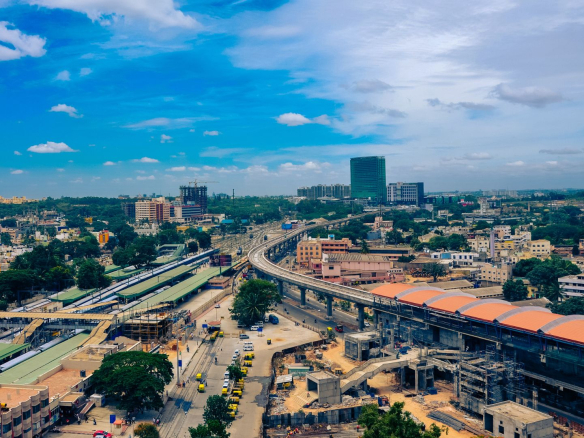
Traditionally, Bangalore’s prime office markets have been Whitefield, Outer Ring Road, Electronic City, and Central Business District areas. While these remain strong, peripheral areas such as North Bangalore (Hebbal, Devanahalli, Yelahanka) are rapidly emerging as growth corridors due to improved connectivity, airport proximity, and availability of large land parcels.The upcoming metro expansions and infrastructure projects are further boosting leasing activity in these regions. Companies looking for cost advantages and scalability are now moving beyond traditional hotspots to emerging hubs.
8. Increased Focus on Employee Experience
The war for talent in Bangalore’s competitive IT and startup ecosystem means companies can no longer view offices as mere workstations—they must be talent magnets. Employers are increasingly choosing office spaces that provide wellness zones, natural lighting, ergonomic designs, breakout areas, and even lifestyle amenities such as gyms and daycare facilities. Proximity to residential clusters and transport hubs is another critical factor influencing leasing choices.An engaging office environment not only boosts employee productivity but also improves retention, a crucial factor for industries facing high attrition rates. For businesses in Bangalore, where the workforce is young and dynamic, the quality of the workplace is now a brand statement.
9. Cost Optimization and Long-Term Flexibility
Global economic uncertainty has pushed businesses to prioritize cost efficiency and flexibility in their leasing strategies. Instead of long-term, rigid leases, companies in Bangalore are opting for shorter contracts, revenue-sharing agreements, or hybrid models where a mix of traditional, managed, and flexible spaces is used. This approach helps organizations optimize operational costs while still maintaining the ability to scale quickly. For startups and SMEs, flexible contracts reduce upfront capital investment, while for MNCs, they provide agility in a fast-changing market.
10. Integration of Global Best Practices
As multinational corporations continue to establish operations in Bangalore, global best practices in design, safety, sustainability, and workplace culture are influencing local developments. Concepts like activity-based working, wellness certifications, advanced fire and safety protocols, and diversity-focused design are becoming part of leasing expectations. This integration ensures that Bangalore’s commercial real estate market remains globally competitive. It also helps Indian firms benchmark against international standards, creating a cycle of improvement and innovation.
The future of office leasing in Bangalore is marked by innovation, flexibility, and sustainability. Build-to-suit campuses offer long-term stability and customization, enterprise managed offices provide convenience and scalability, and flexible workspaces cater to dynamic workforce needs. Add to this the growing emphasis on green buildings, employee well-being, and technology-driven leasing models, and it becomes clear that Bangalore is not just keeping pace with global trends but often setting them. For businesses, this means that leasing is no longer just about securing space—it is about making strategic choices that align with growth, culture, and sustainability goals. As the city continues to evolve, organizations that embrace these new models will find themselves better positioned to attract talent, optimize costs, and thrive in India’s most dynamic commercial hub. At BangaloreOffice.com, with years of experience and deep expertise in the local market, we help businesses identify and secure office spaces that perfectly match their vision, operational needs, and long-term growth strategies.